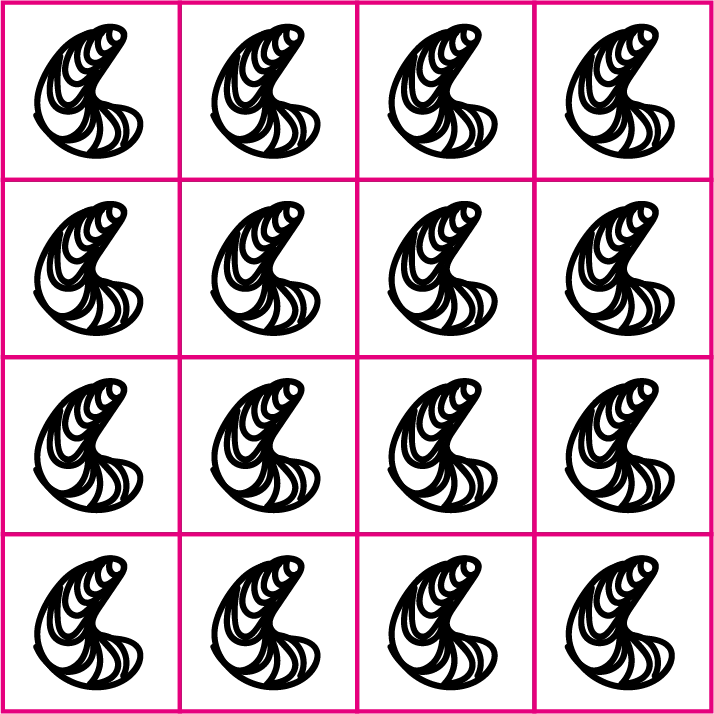
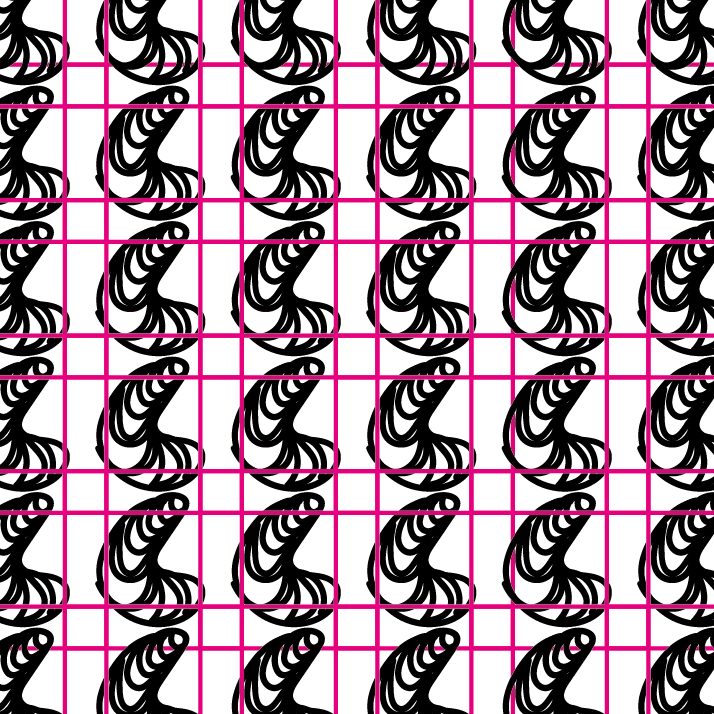
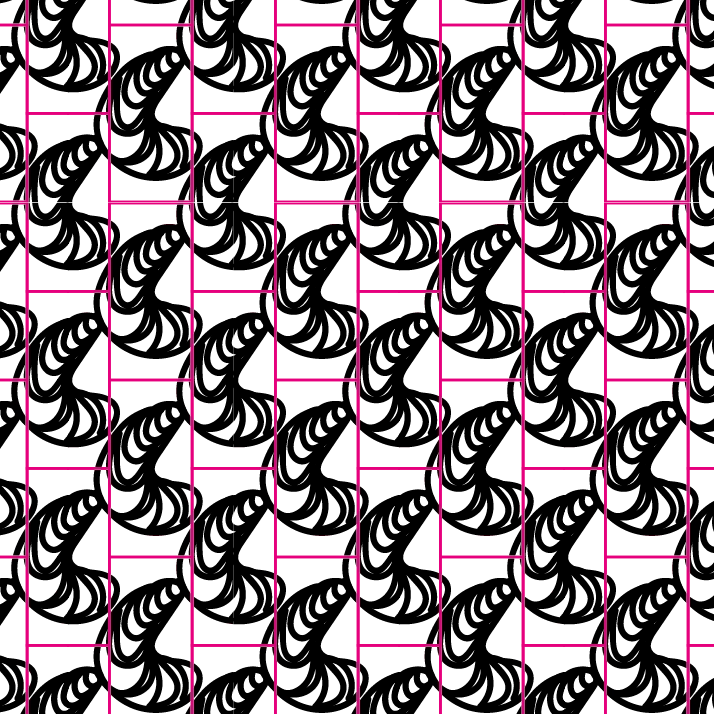
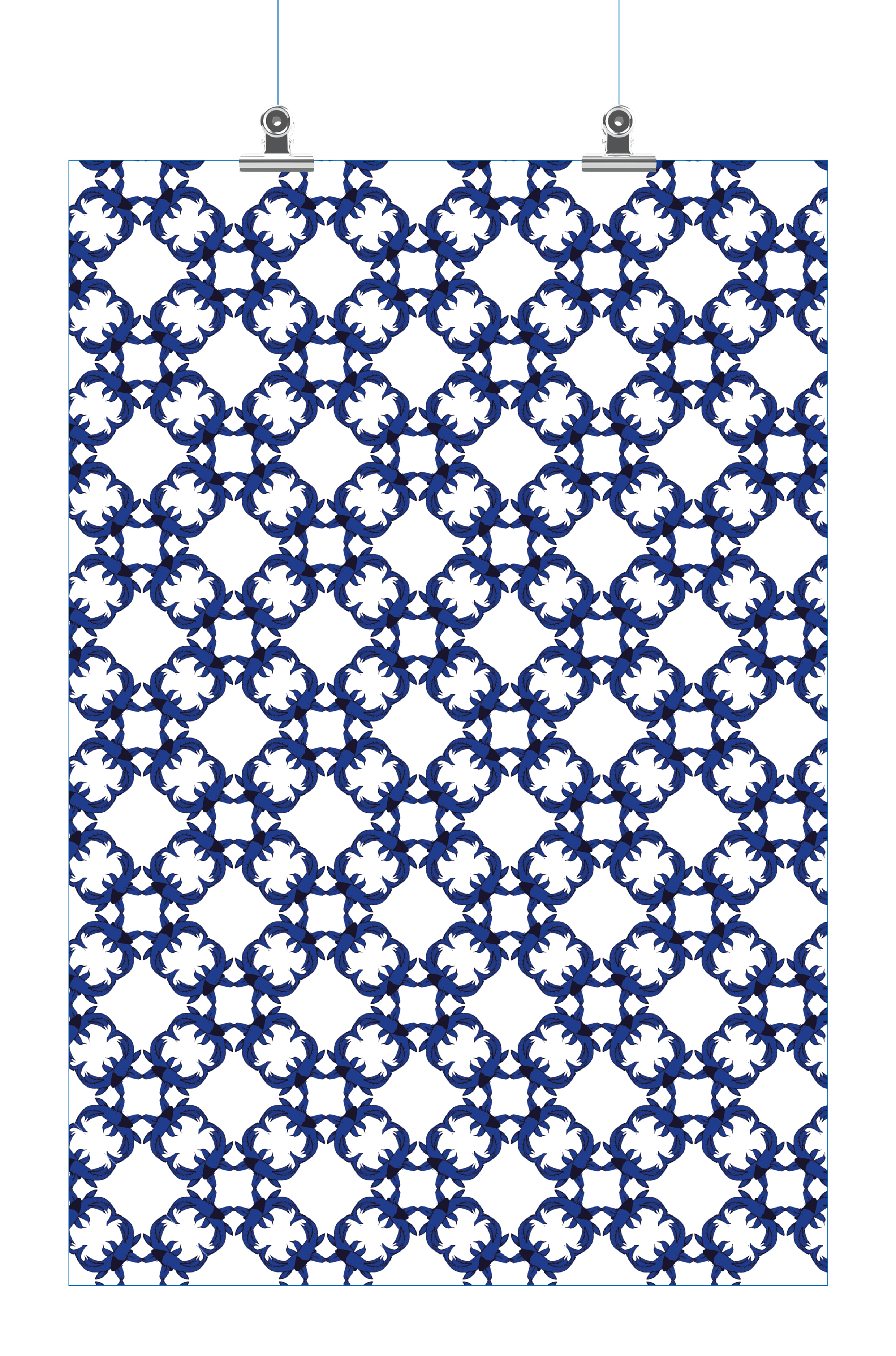
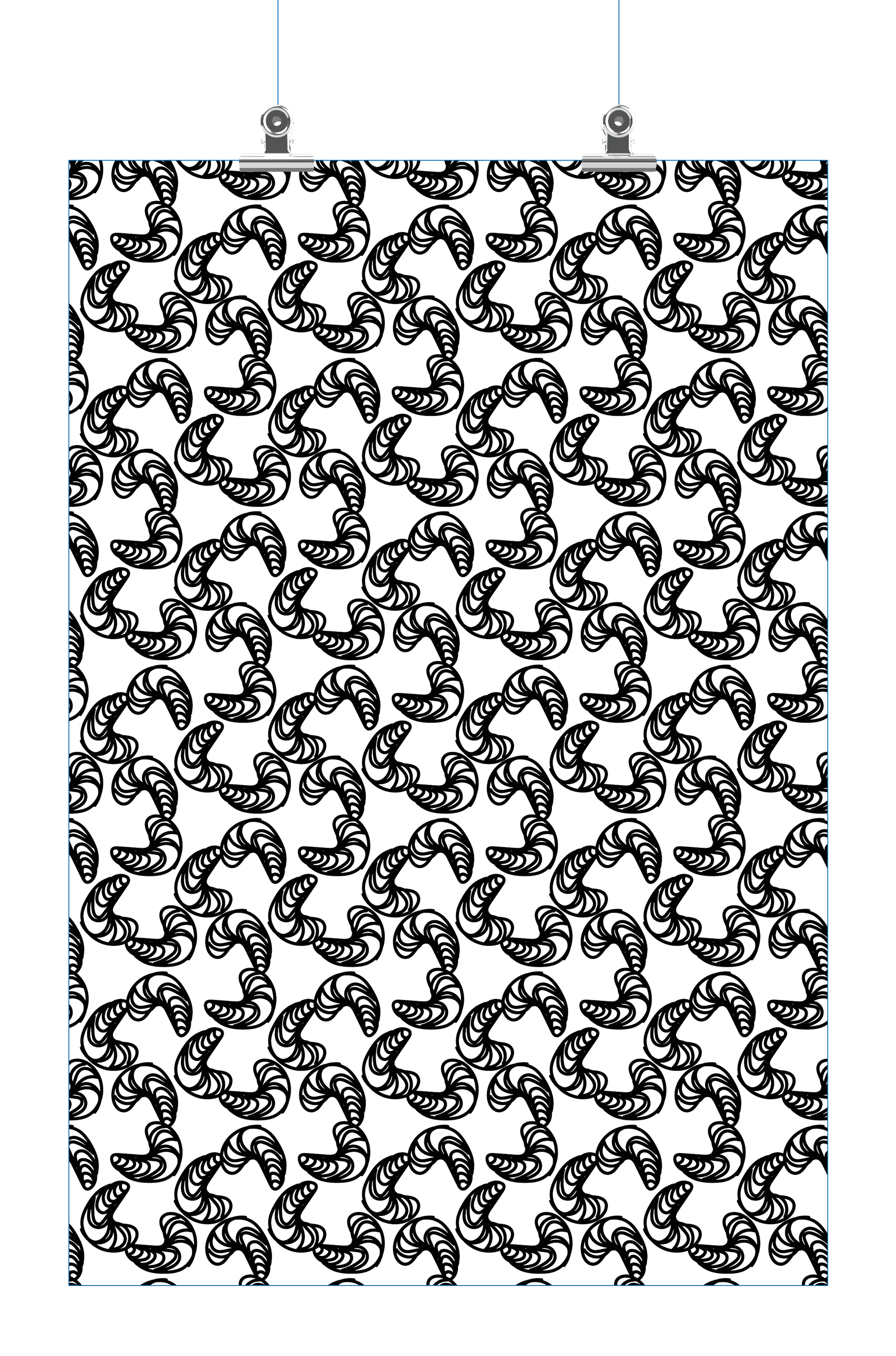
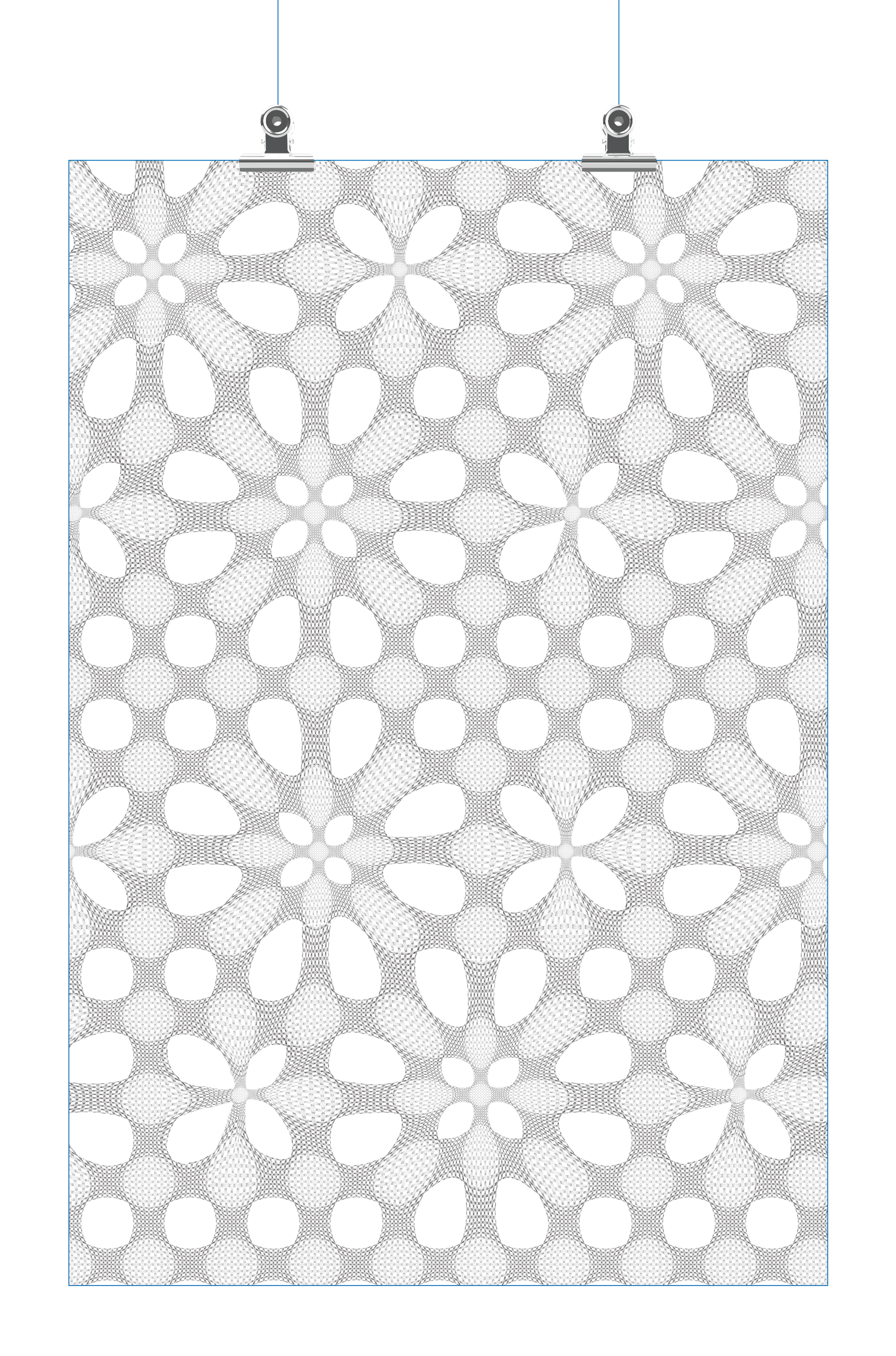
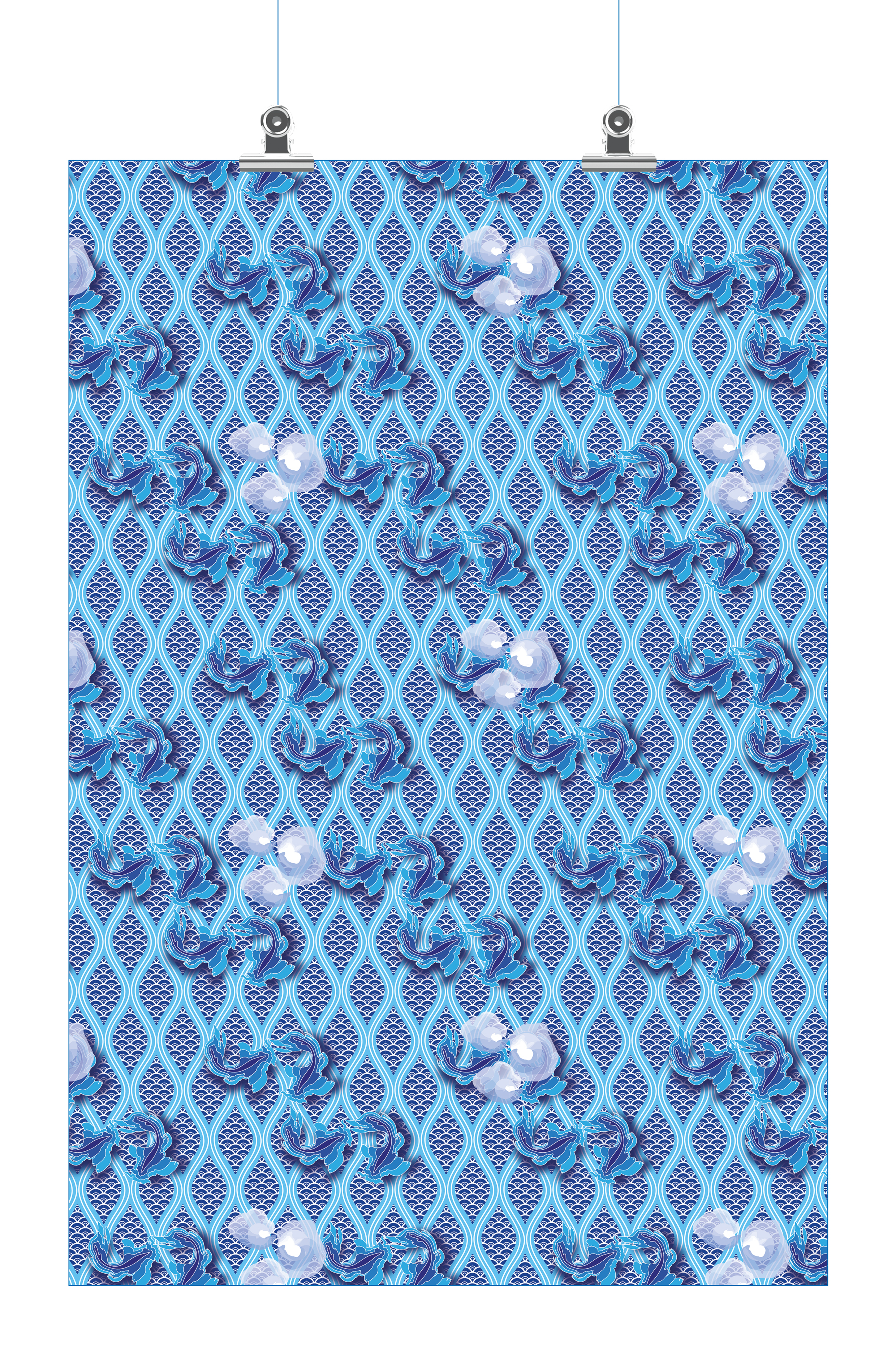
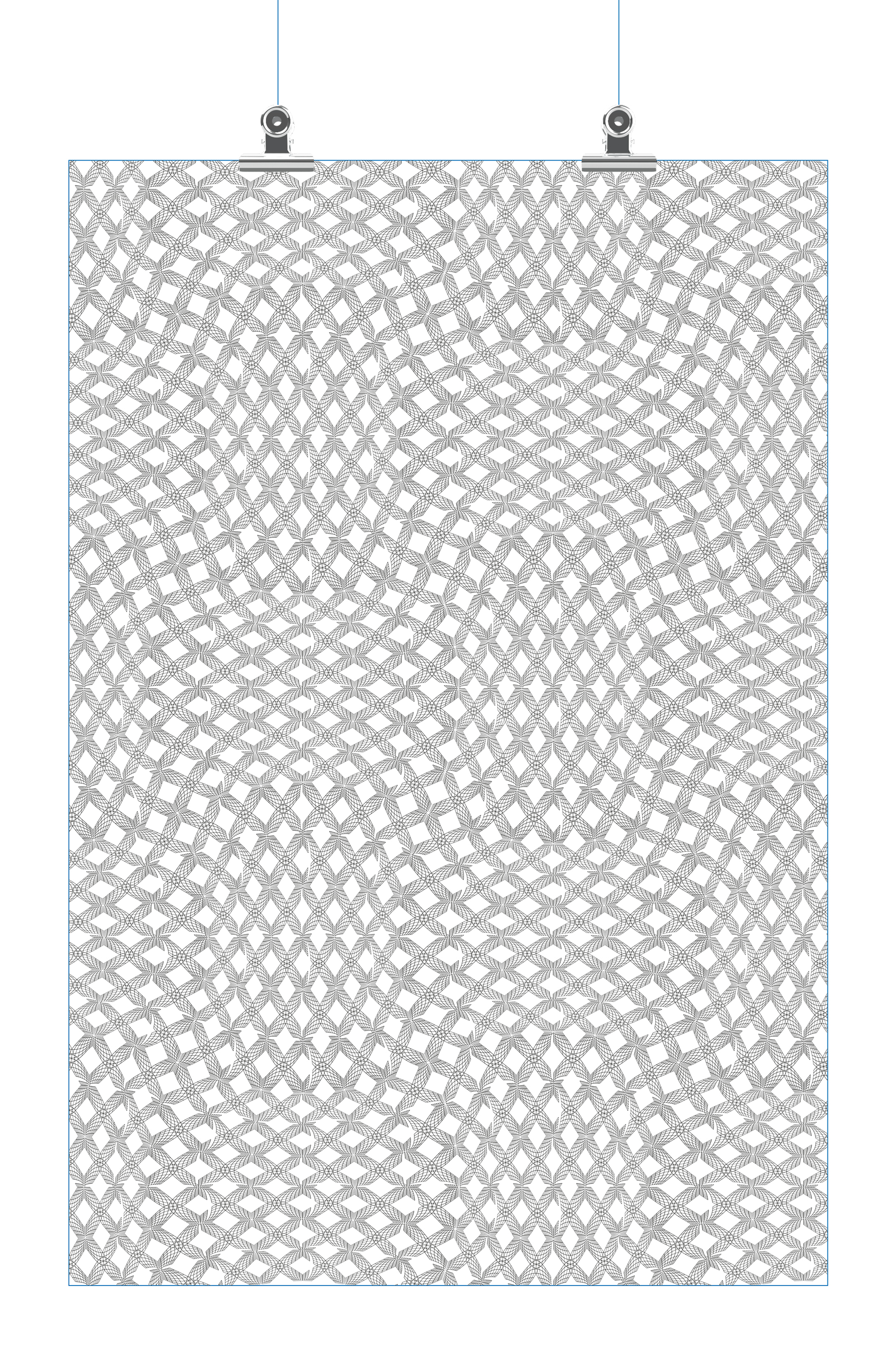
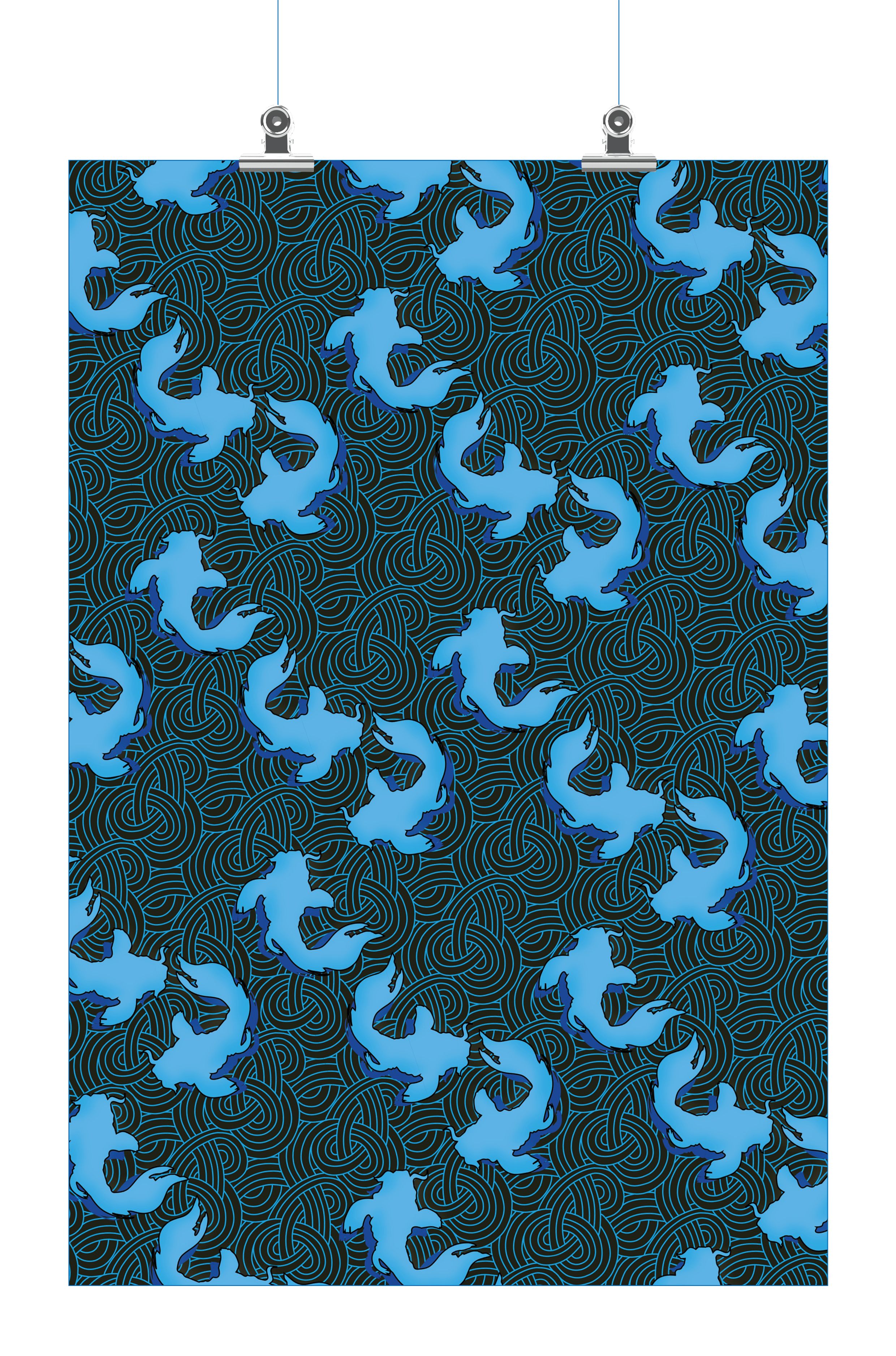
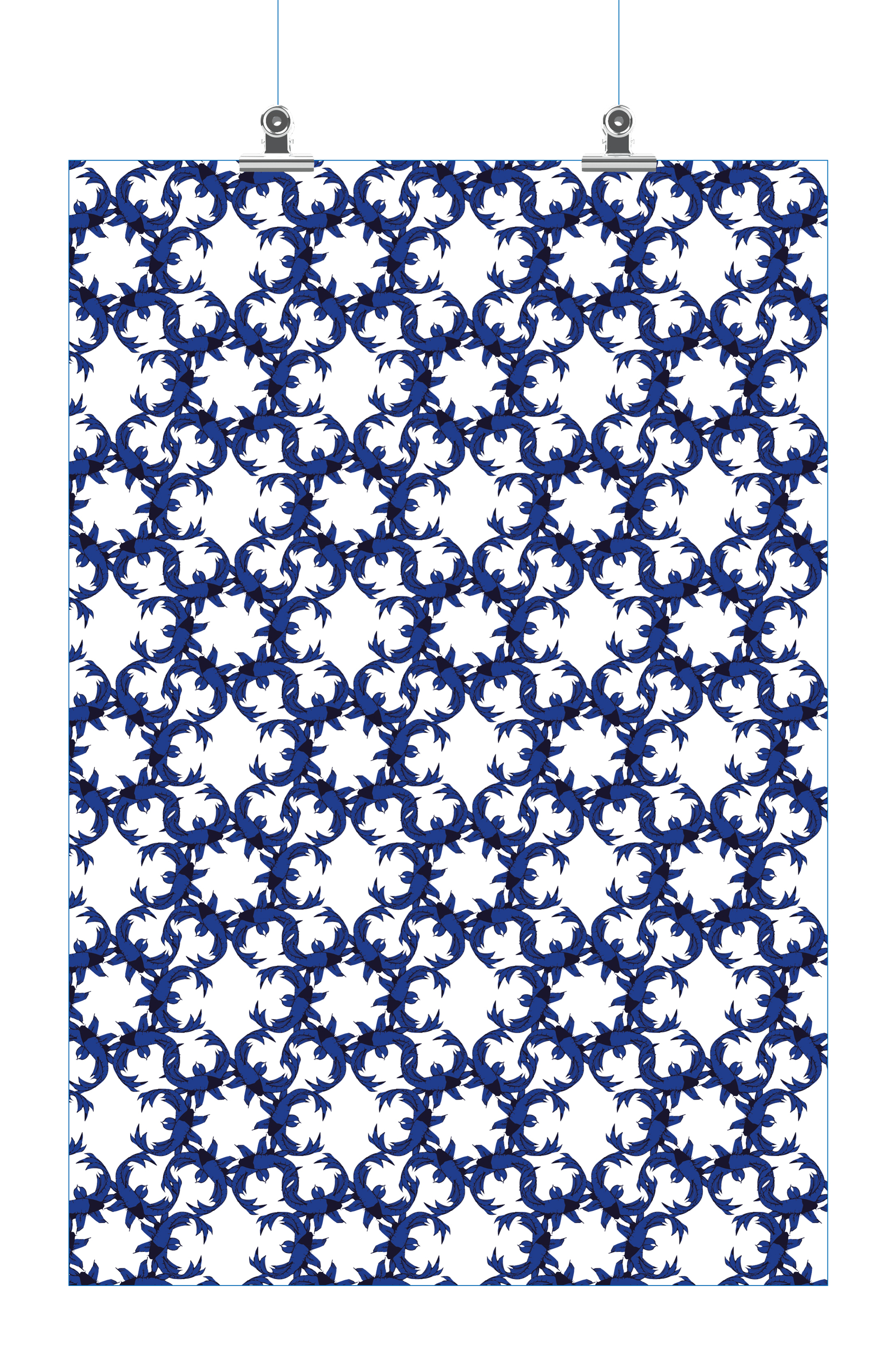
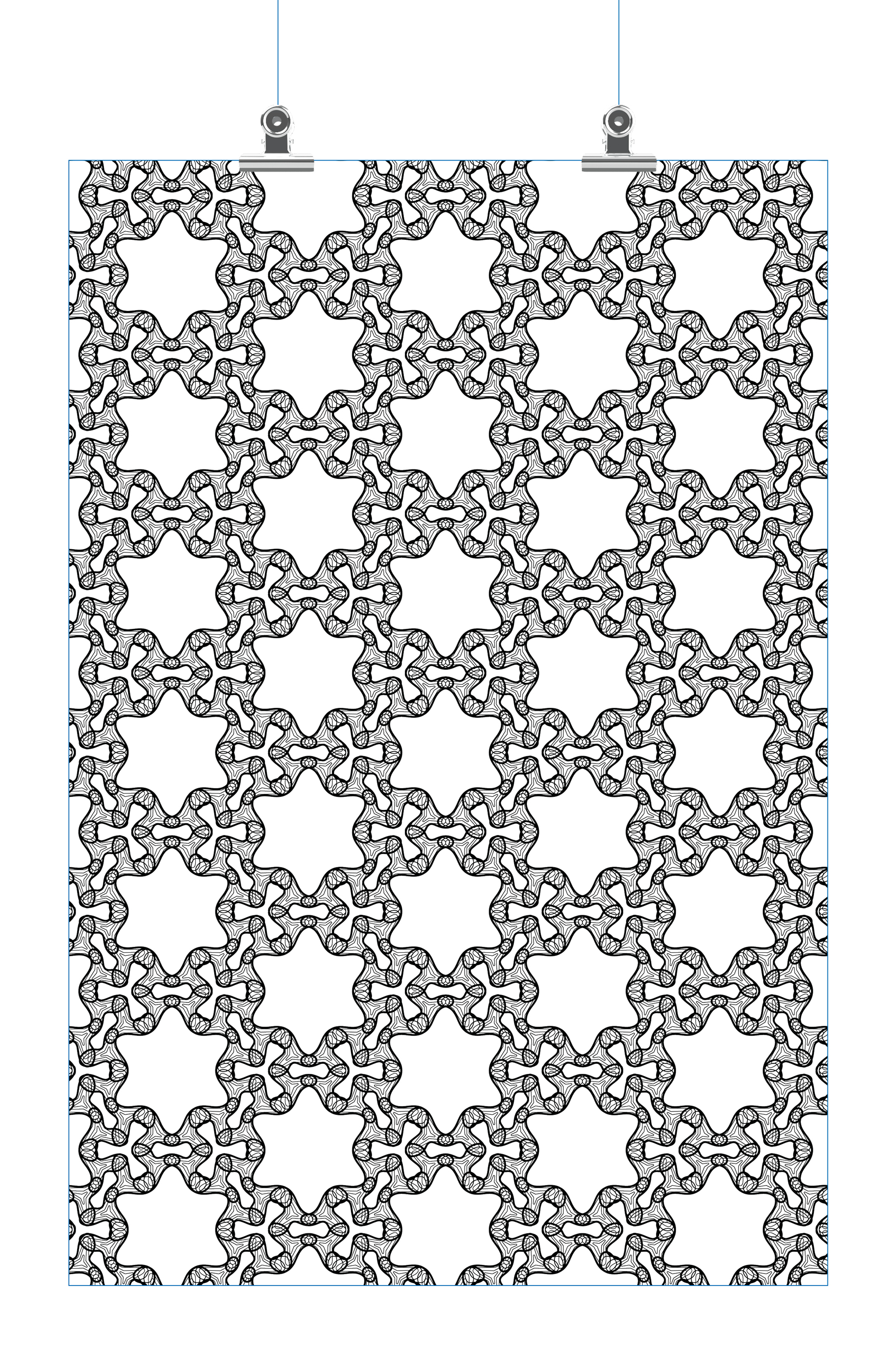
Invisible Grids investigates how patterns emerge from underlying structures — visible or hidden. Drawing inspiration from historical and cross-cultural ornamentation, the process focused on transforming formal rules into dynamic visual compositions.
The exploration was divided into three thematic chapters:
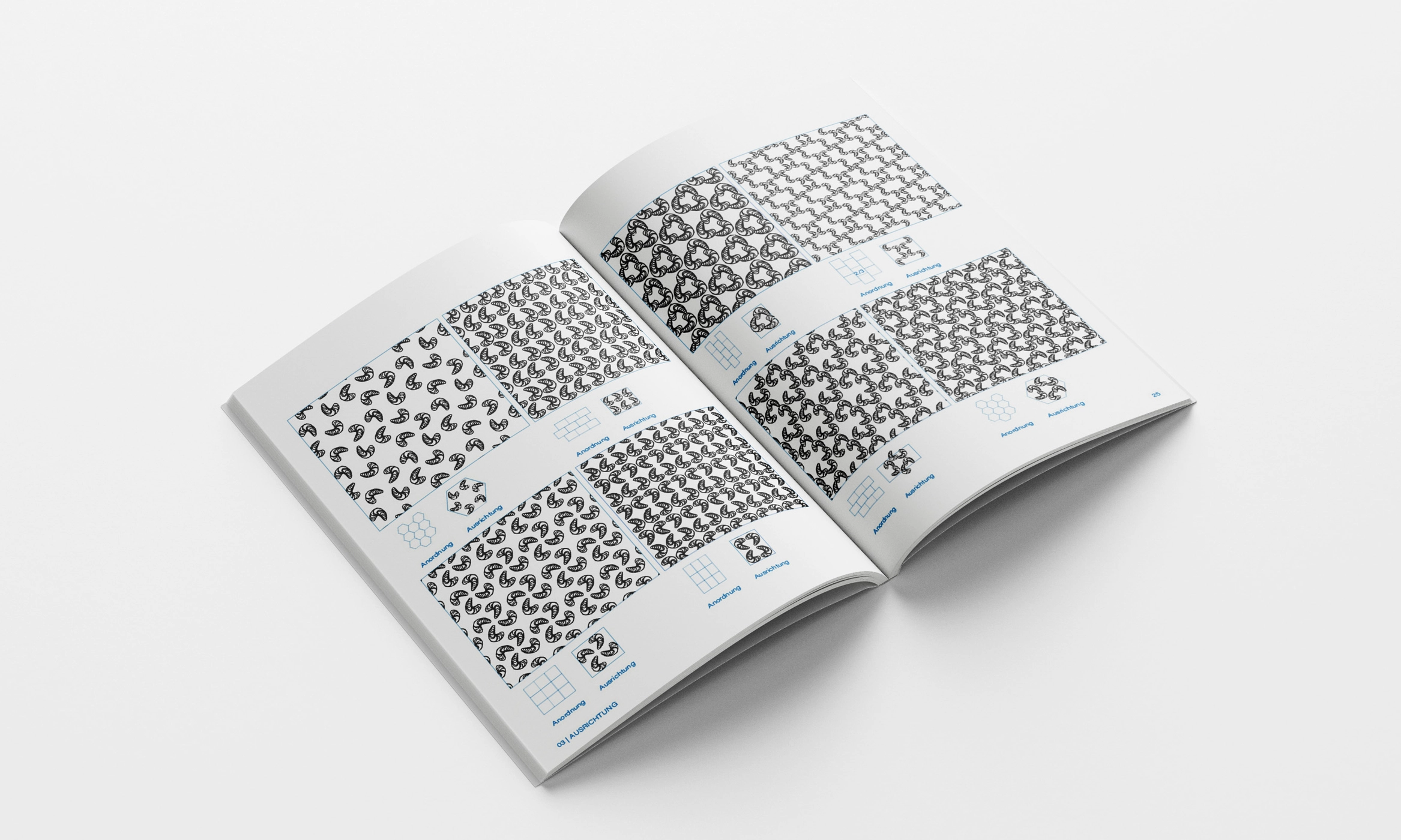
1| Geometric Foundations:
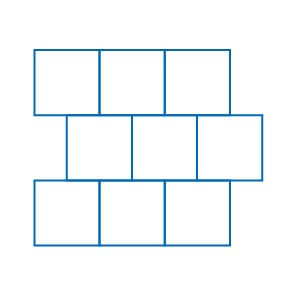
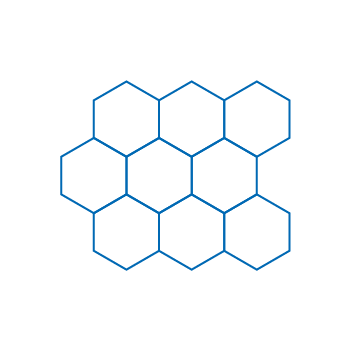
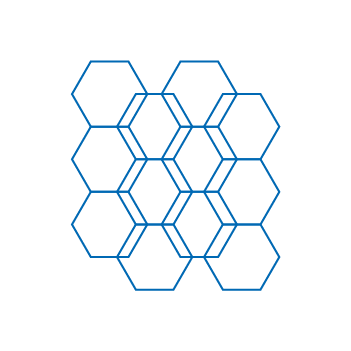
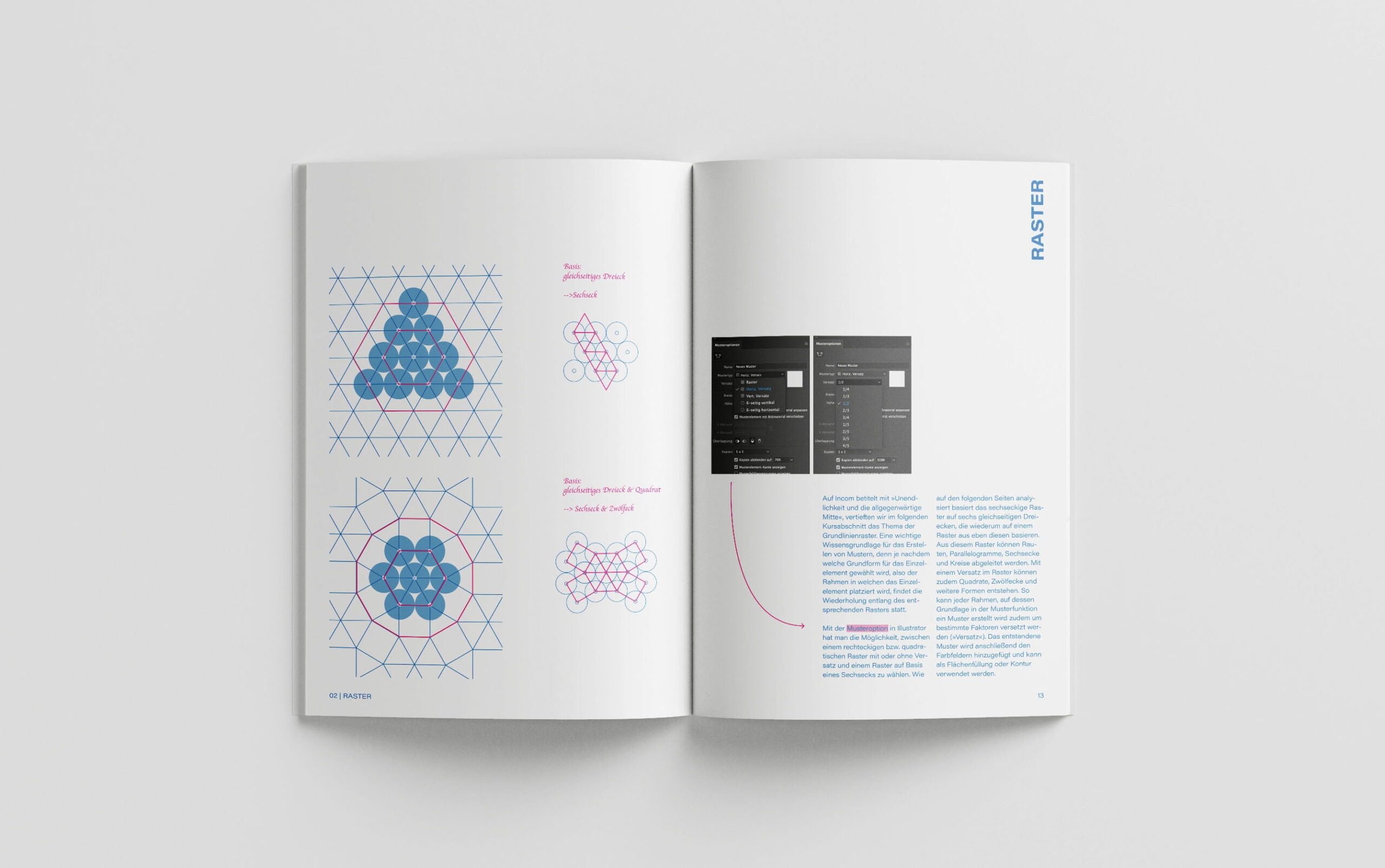
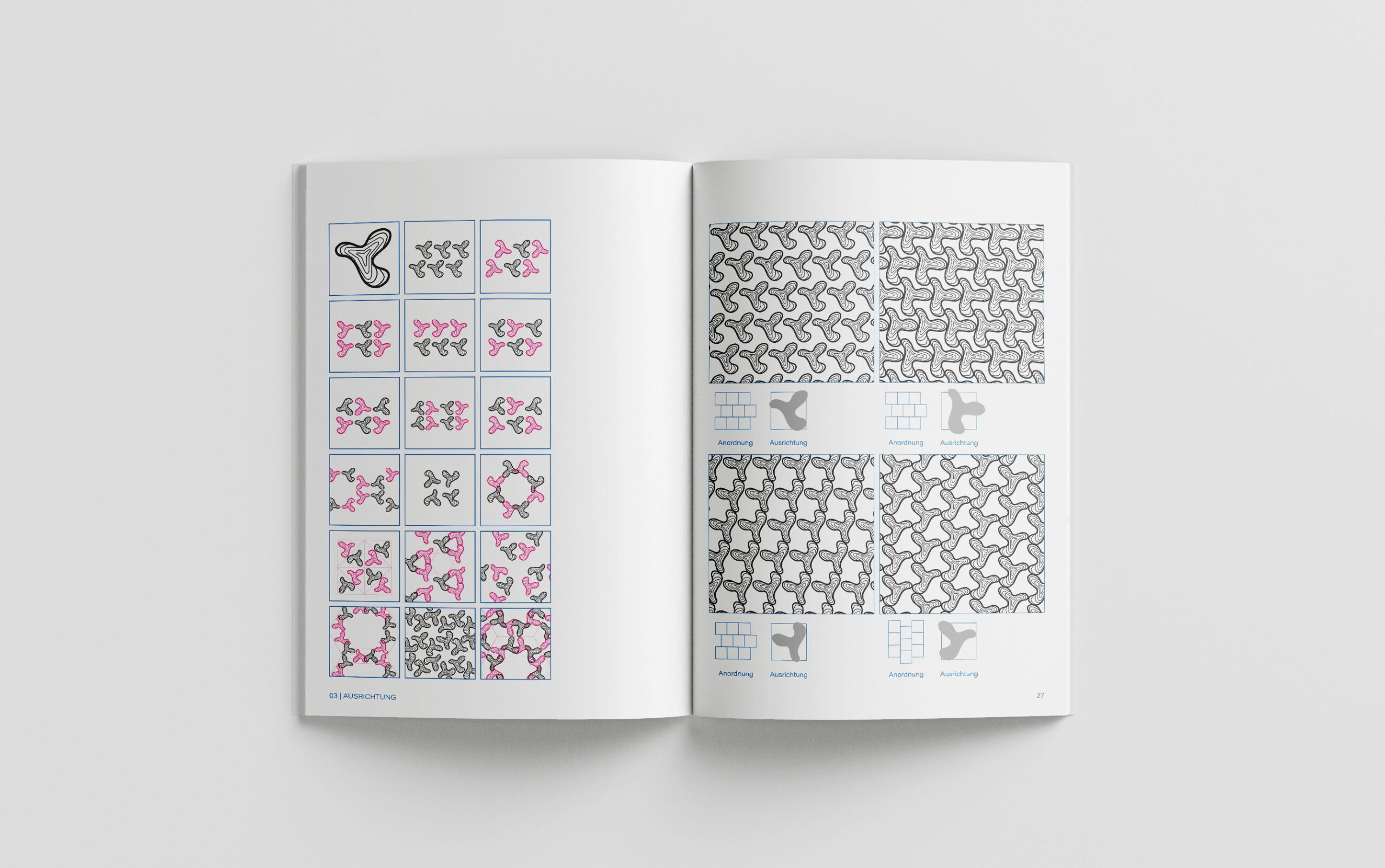
A deep dive into the mathematical construction of patterns, working with alignment systems, rapports and grids, both analog and in Adobe Illustrator.
2| Retro Aesthetics:
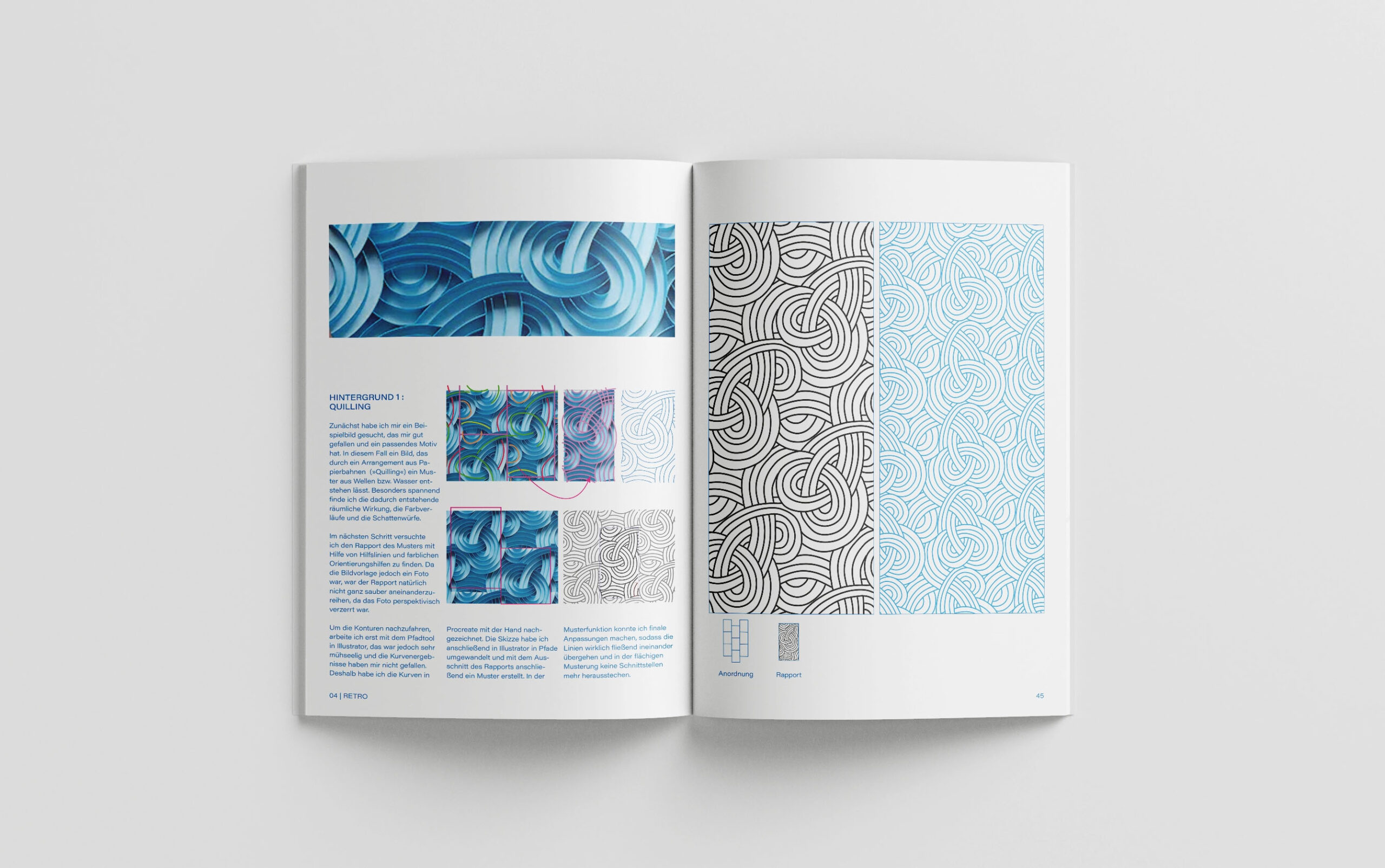
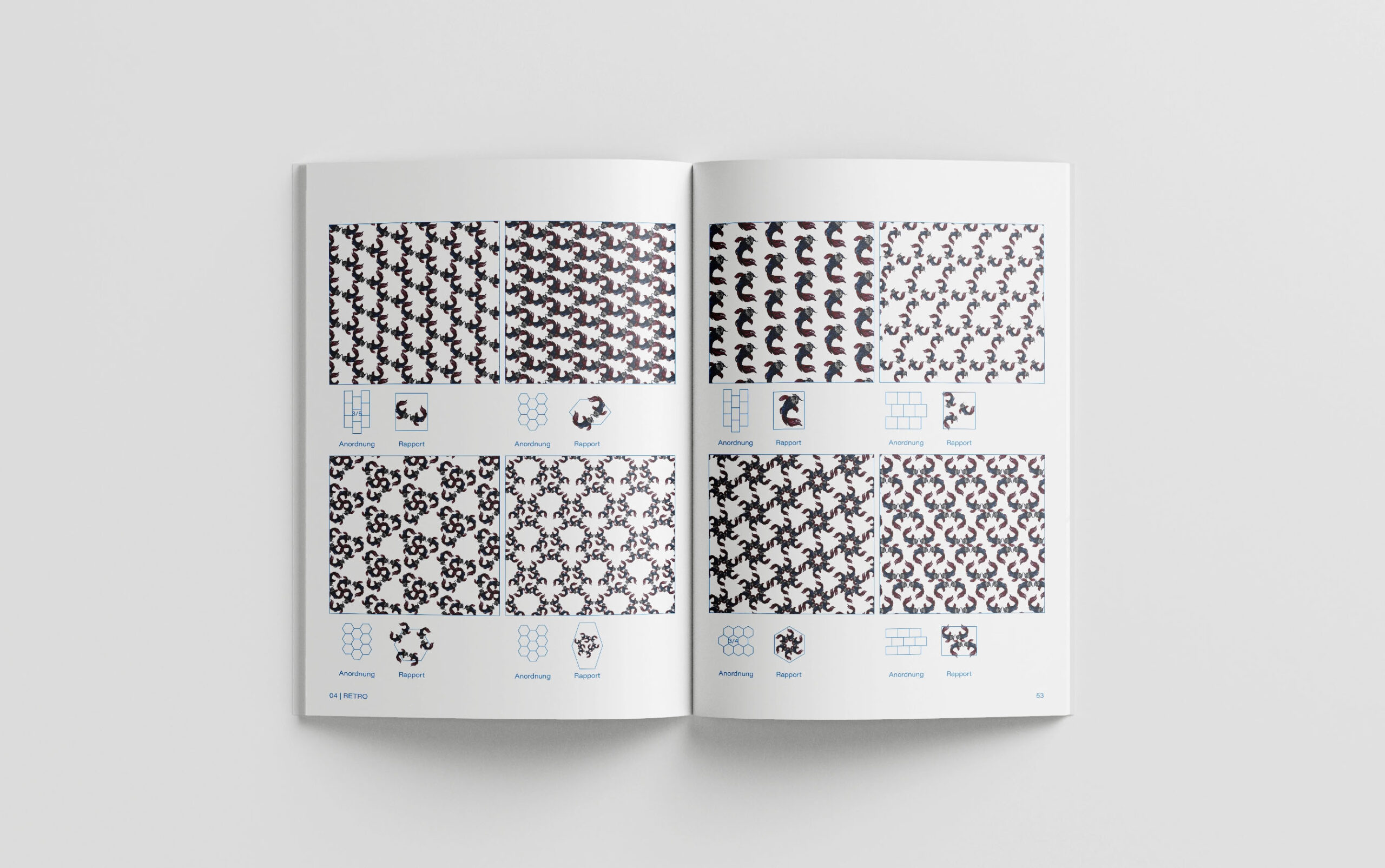
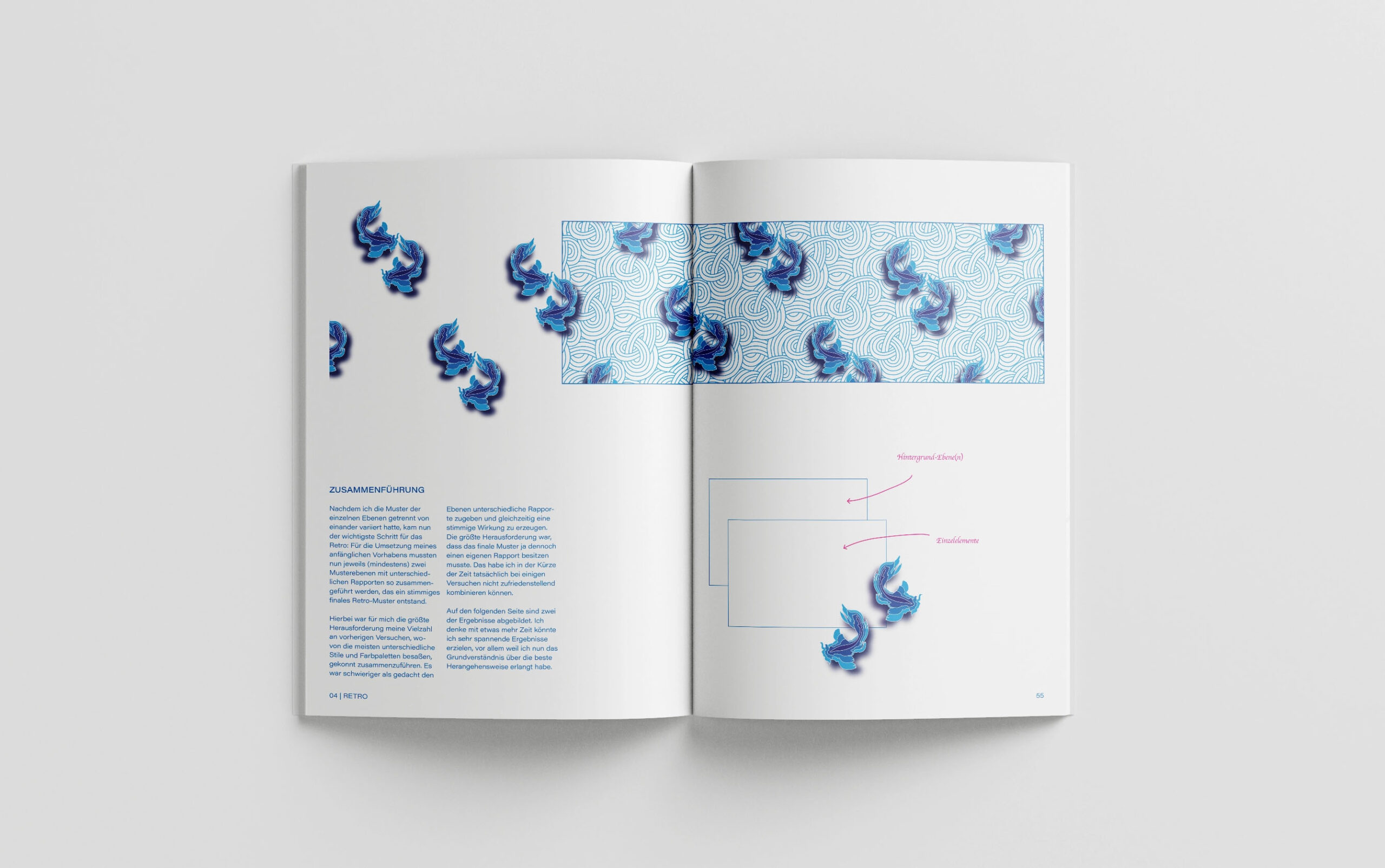
An investigation into culturally rooted design styles. My focus lay on Japanese ornamentation, examining key motifs, color schemes and structural logic.
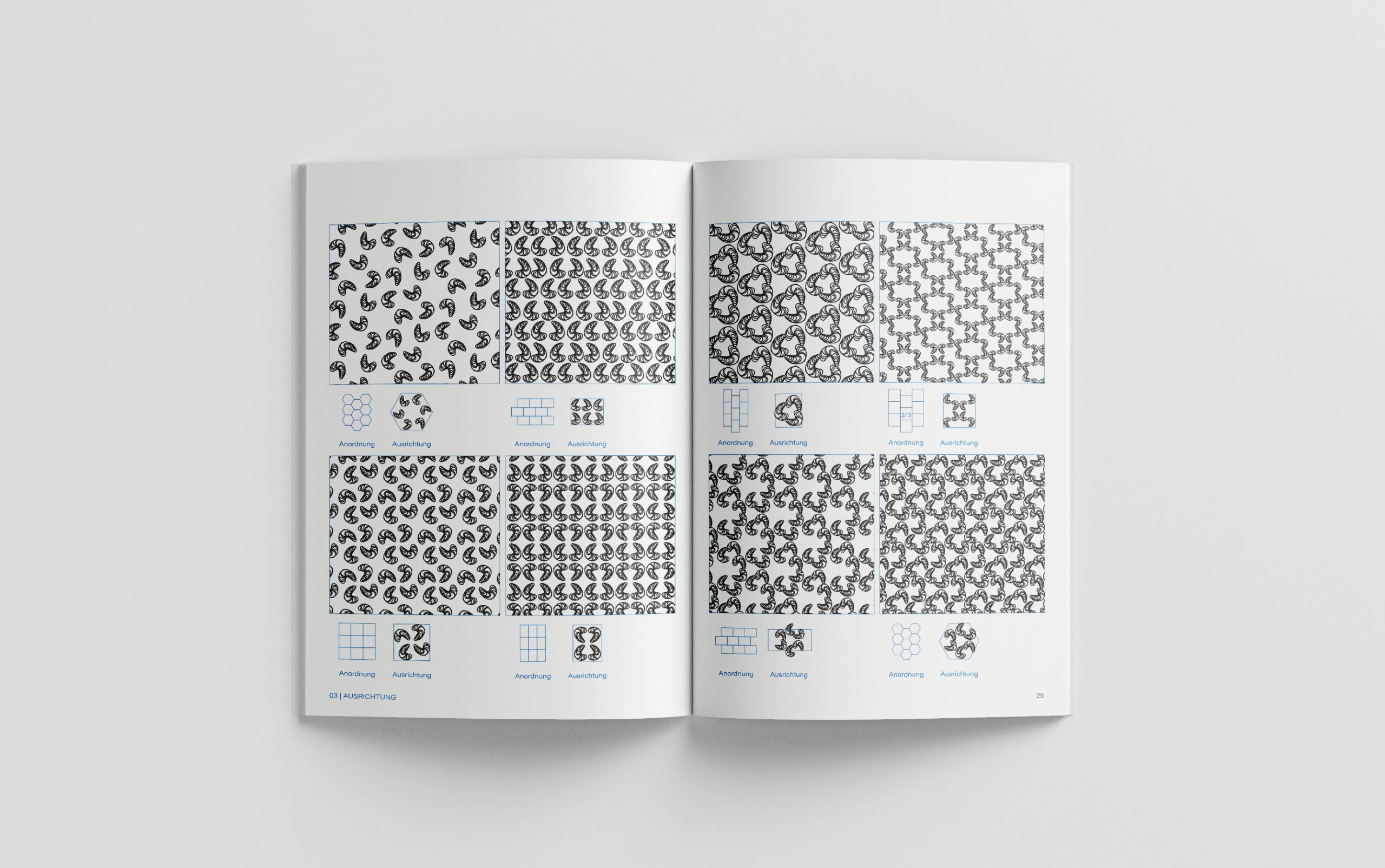
Using a mix of analog sketches and digital workflows, I applied geometric rules like symmetry, rotation, and repetition to develop generative pattern systems. The evolving design process and its visual logic were compiled in a 100-page publication, serving as both documentation and visual essay. The core workflow was shaped through Adobe Illustrator, emphasizing precise rule-based construction and visual variation.
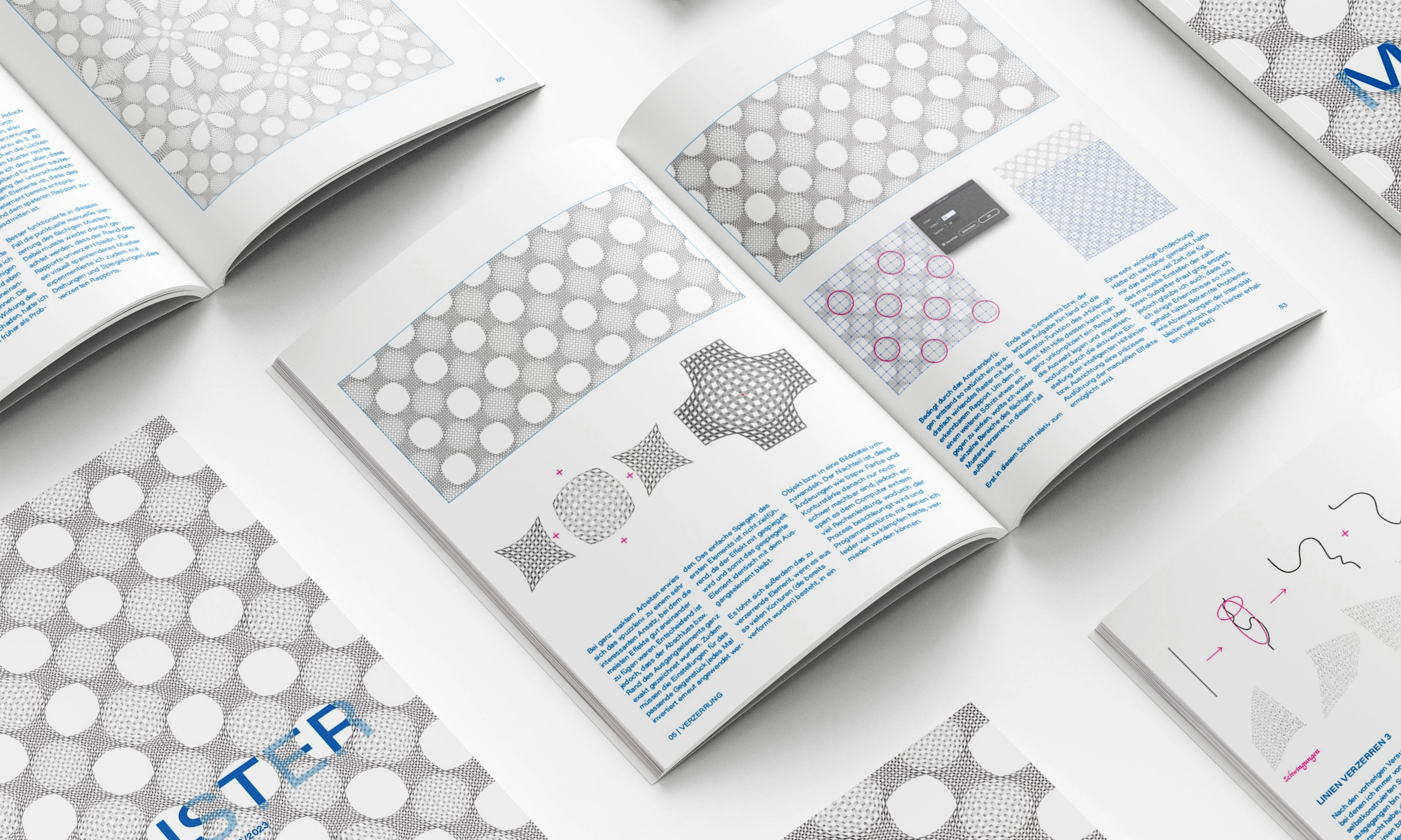
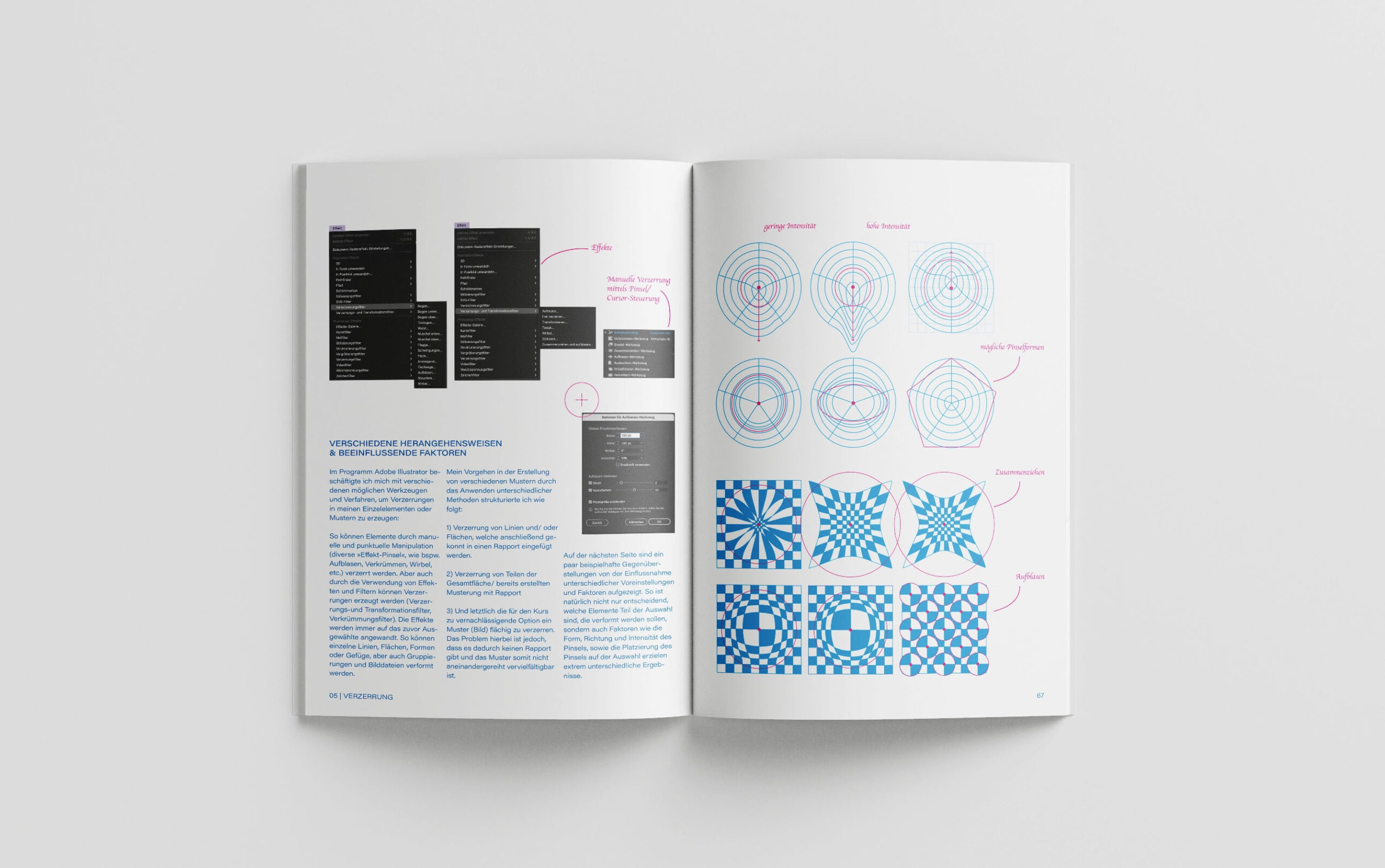
An experimental study of distortion-based patterns, exploring how visual tension and layering can manipulate perception.
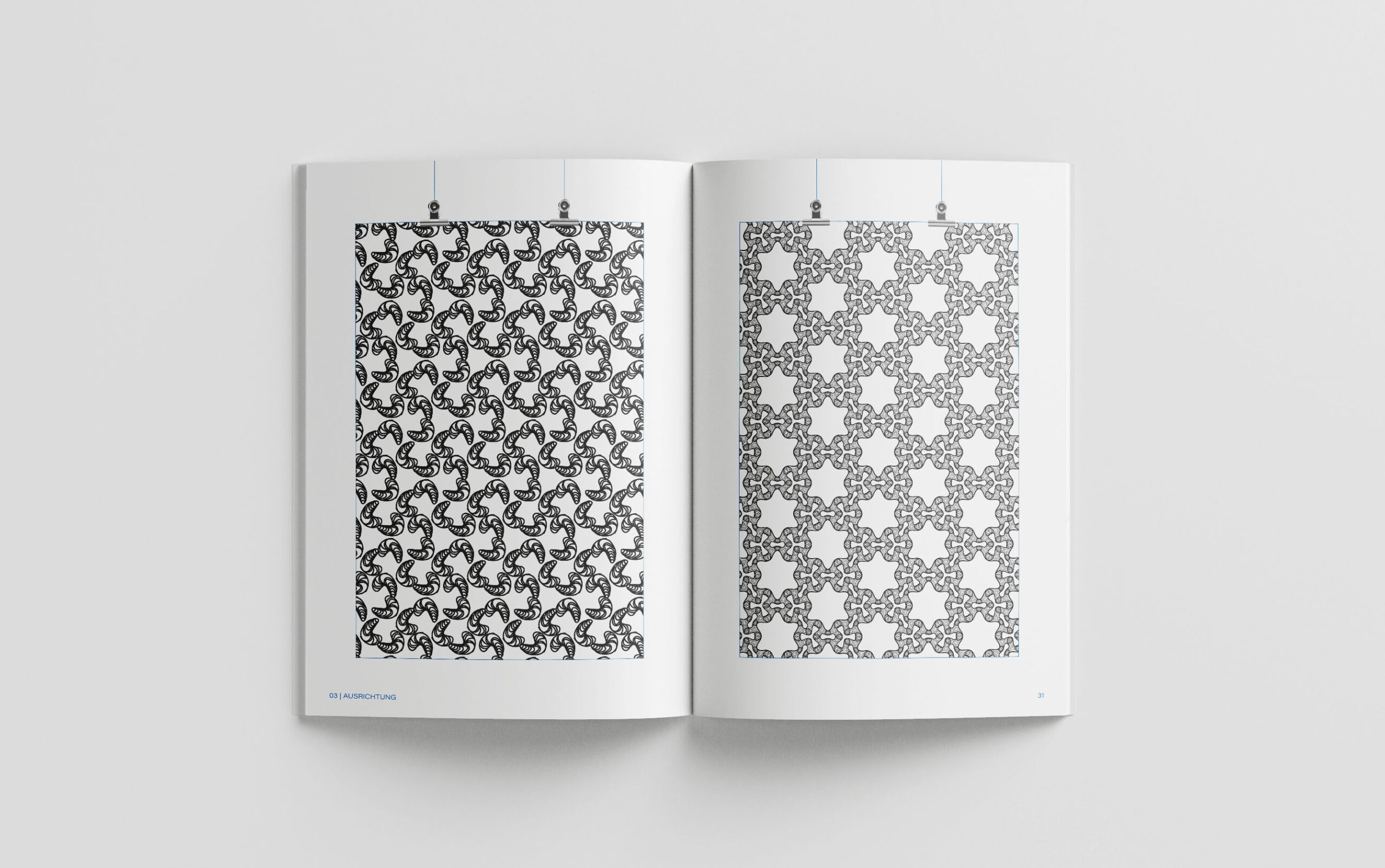
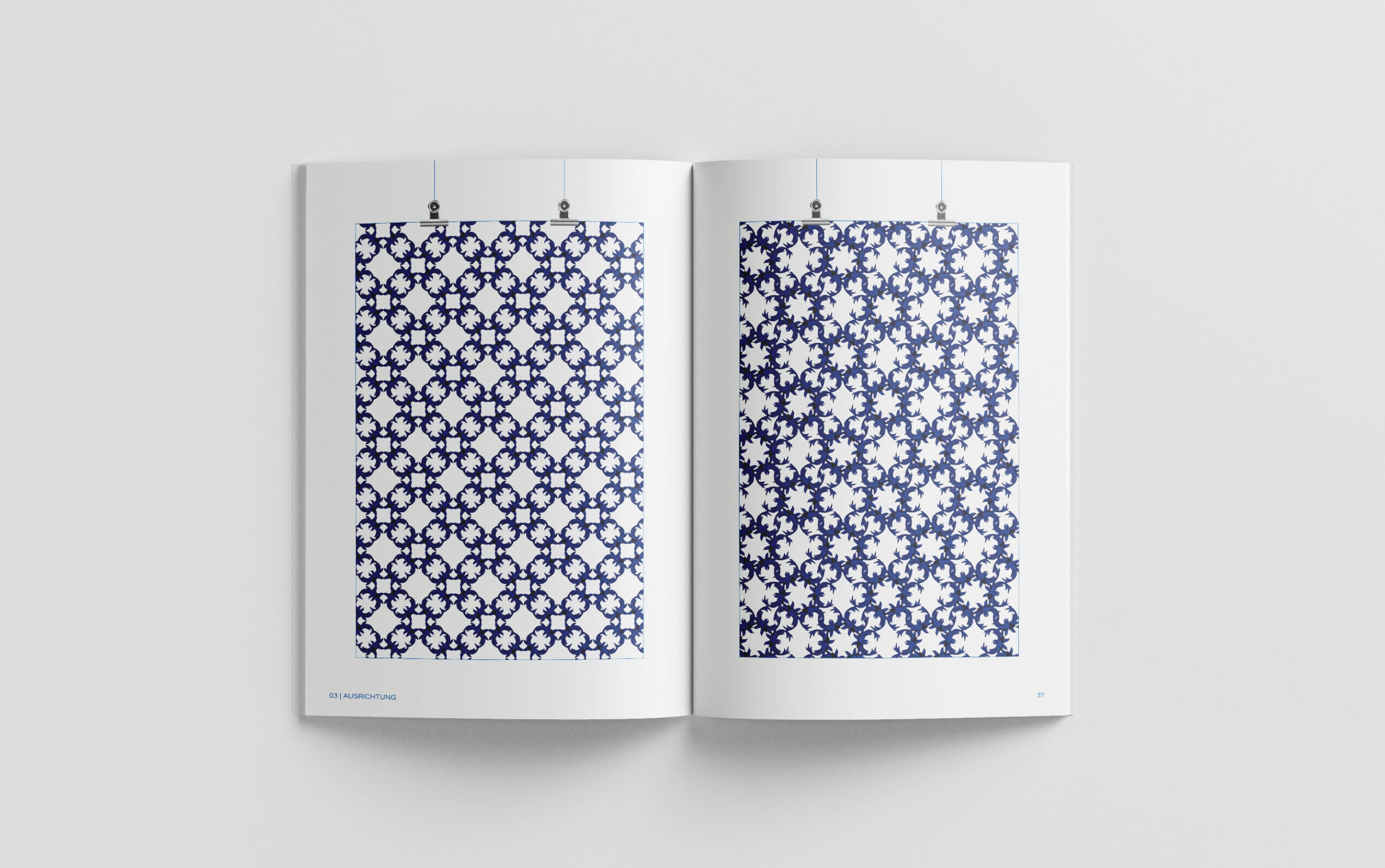
During each chapter research, I developed numerous patterns. Using a mix of analog sketches and digital workflows, I applied geometric rules like symmetry, rotation, and repetition to develop generative pattern systems. The core workflow was shaped through Adobe Illustrator, emphasizing precise rule-based construction and visual variation.

The evolving design process and its visual logic were compiled in a 100-page publication, serving as both documentation and visual essay.
Adobe Illustrator, Adobe InDesign, Adobe Photoshop, ProCreate
Context: University of Applied Sciences Potsdam (2022/23),
Mentor: Prof. Klaus Keller


Studies in Pattern Repetition
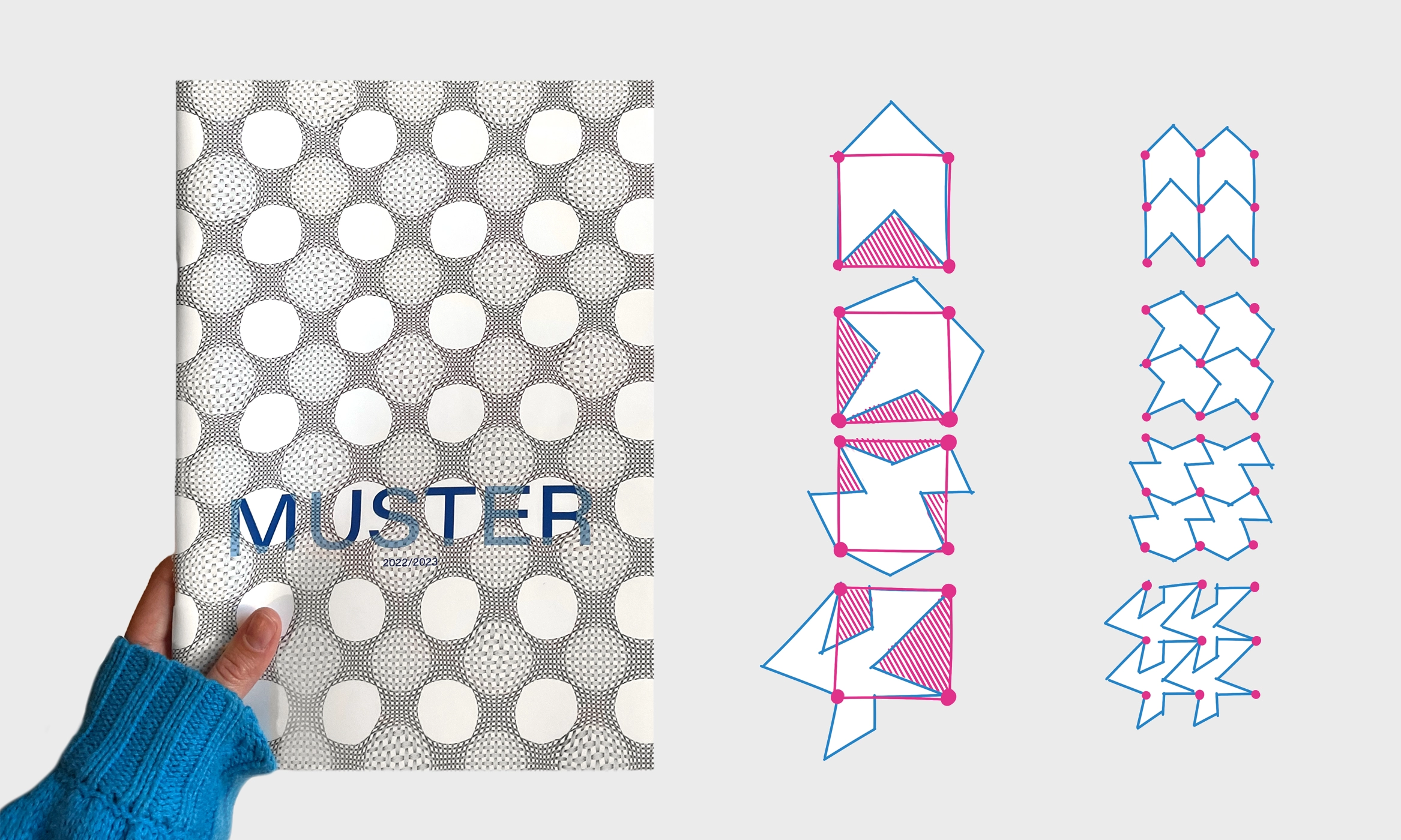
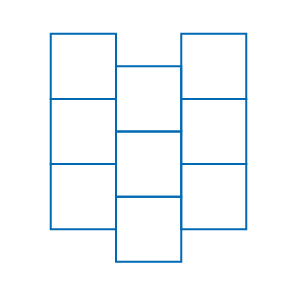
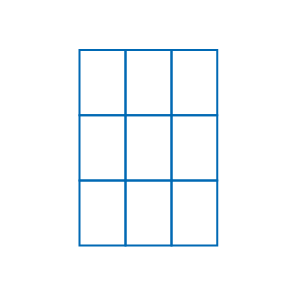
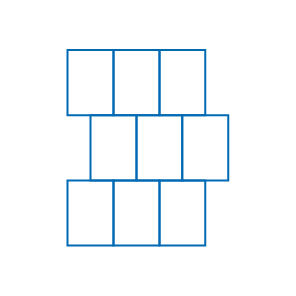
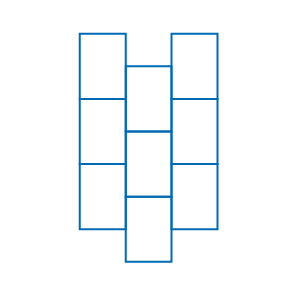
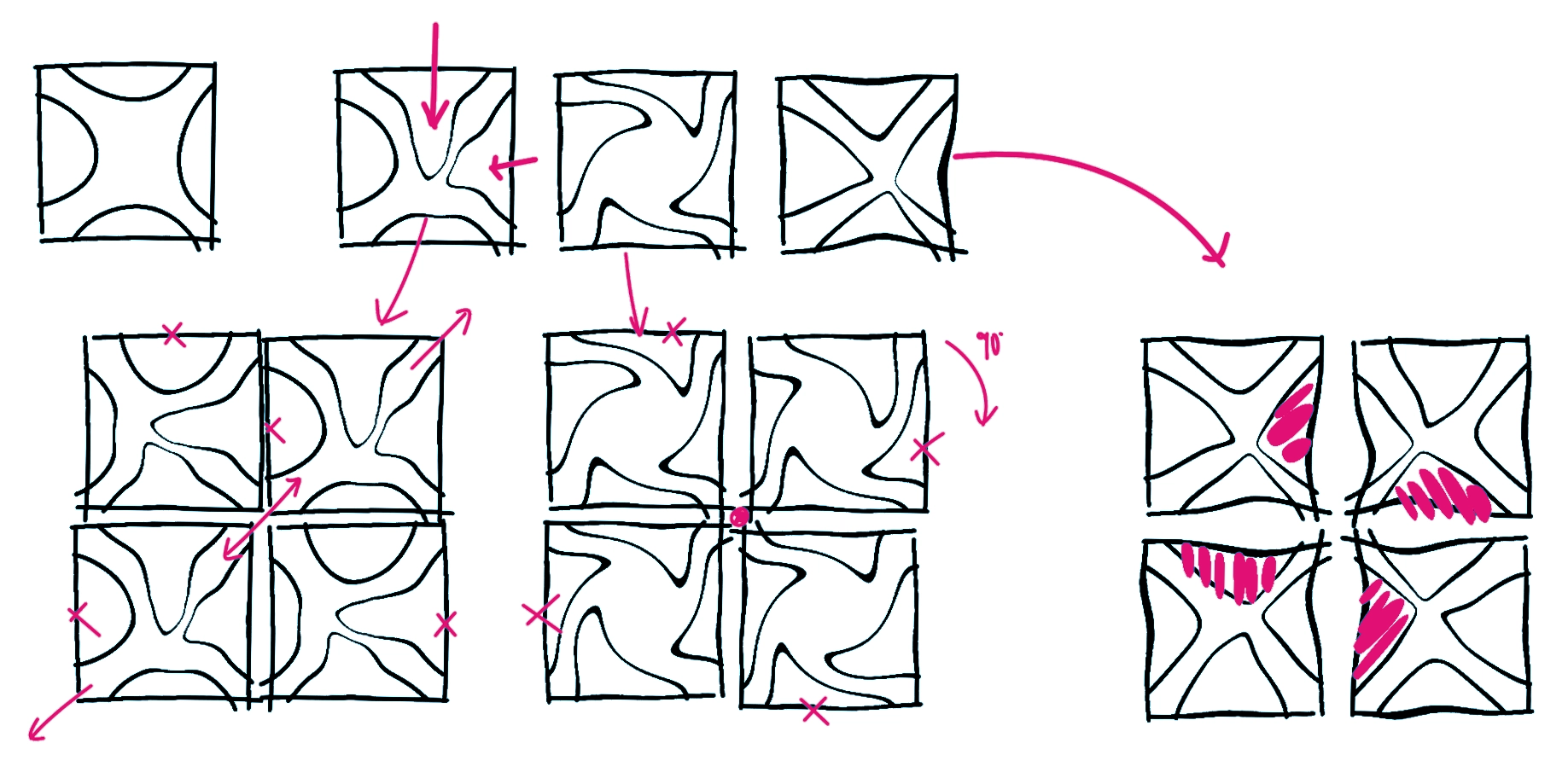
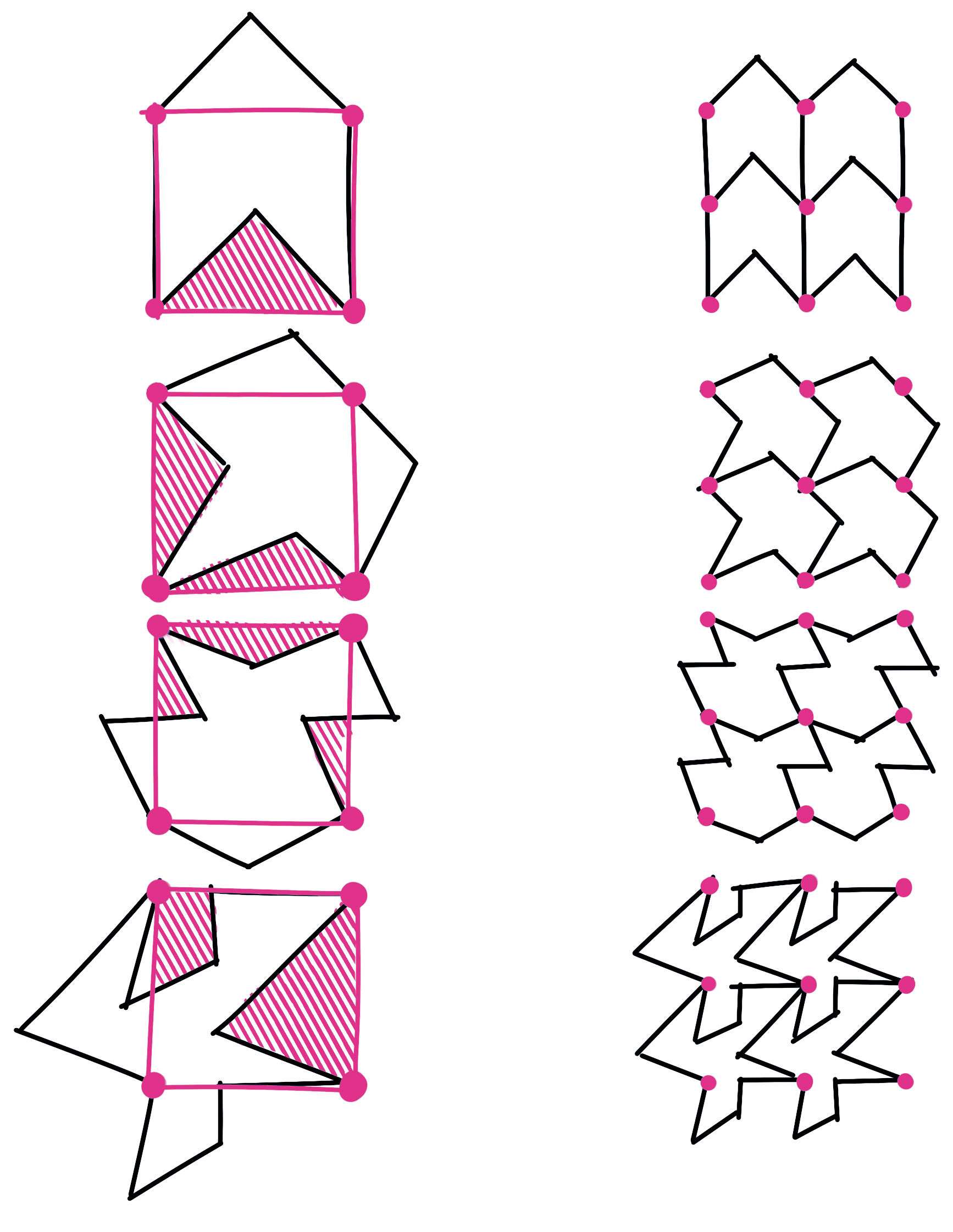
Seamless pattern design begins with understanding the logic behind repetition. Before developing more complex systems based on mathematical rules and transformations, I explored how individual elements interact within a repeat structure and how continuity can be maintained across its boundaries.


Quick sketches became an essential tool throughout this process. They helped me investigate how operations such as rotation, reflection and translation influence the construction of pattern repeats, allowing me to test ideas rapidly and refine the underlying design principles step by step.


Project Documentation